
Real-Ear Measurements and Hearing aid Verification
by: Rixon Rouse, Au.D. Audiologist at San Francisco Hearing Center
You can buy a suit off the rack, and it might look fine. But a tailor takes your measurements and adjusts it to fit your body. Hearing aids work in a similar way. The device itself may be excellent, but the real difference comes when your audiologist fits it to your ears specifically. That’s where real-ear measurements (REM) comes in.
How Real-Ear Measurements Work and Why It Matters
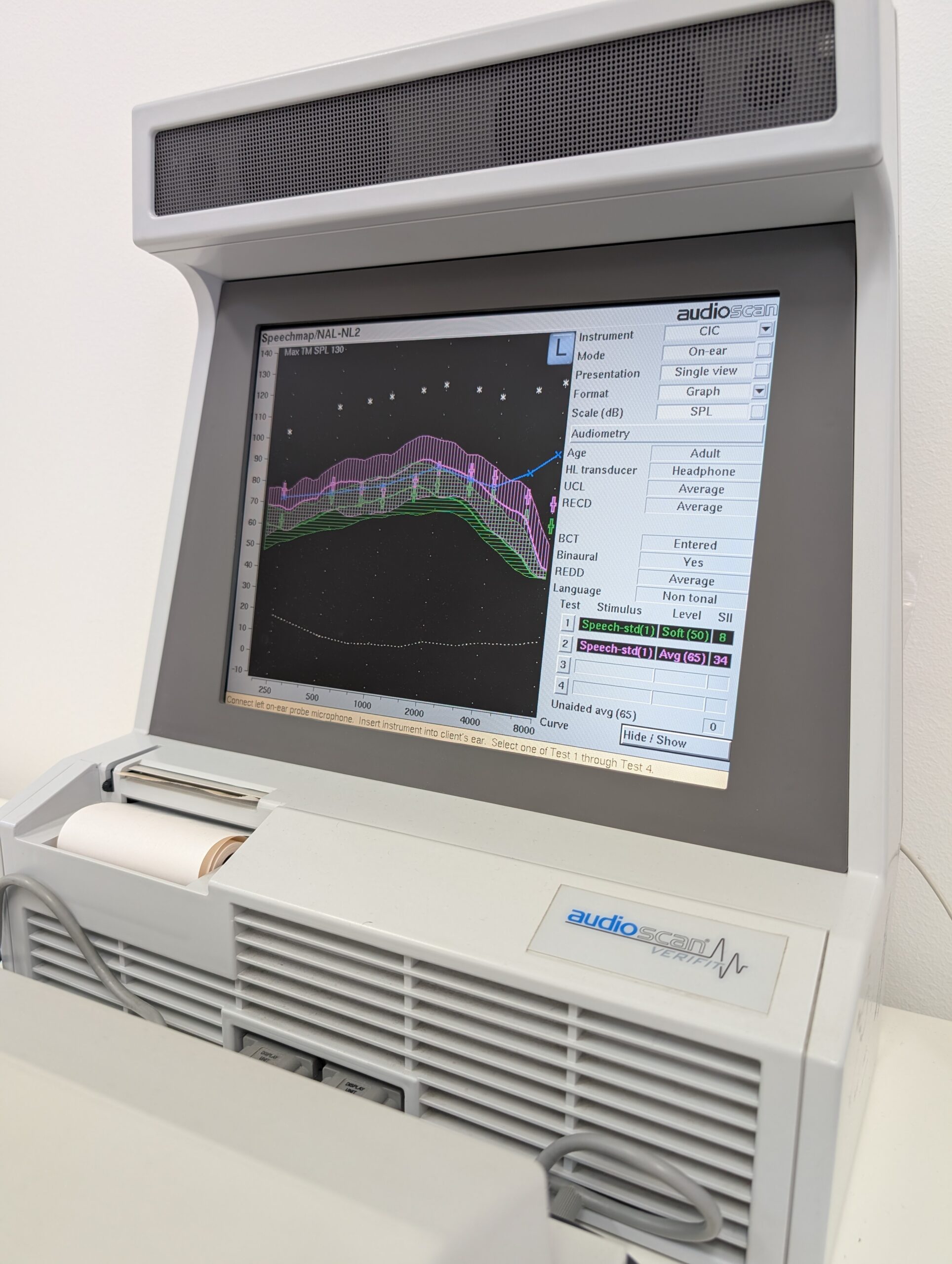
During your hearing aid fitting, your audiologist places a tiny probe tube in your ear canal alongside your hearing aid. This microphone measures the actual sound levels reaching your eardrum, so the real-ear measurements technology helps ensure accurate hearing aid fitting.
Why does this matter? A suit off the rack fits an average body whereas a tailored suit fits precisely for you. Hearing aid software makes a smart initial estimate from your hearing test results. However, it cannot account for the unique shape and volume of your ear canal. REM is the tailor’s tape measure. It closes the gap between a good guess and a precise fit. Research consistently links verified fittings with better speech understanding and higher satisfaction, with real-ear measurements being one of the most important tools for audiologists.
Hearing aid verification of Smaller In-Ear Style Devices?
Some hearing aids, like Lyric or certain deep-fitting invisible-in-canal (IIC) devices, sit very deep in the ear canal. That depth makes it impractical to place a probe tube alongside them. For these styles, verification takes a different form: coupler-based measurements, validated outcome questionnaires, and structured follow-up to refine the fit over time. Although real-ear measurements are not feasible here, other verification methods are used.
The principle stays the same regardless of device type. Your hearing healthcare professional should have a deliberate plan for confirming your hearing aids work well for you. For most hearing aid styles, REM is the most precise tool in that plan. For deep-fit devices, other methods fill that role. In nearly every situation, some type of hearing aid verification should be considered whenever possible to ensure optimum performance.
A Good Question to Ask
Whether you’re getting hearing aids for the first time or have been wearing them for years, it’s always worth asking:
| “How do you verify that my hearing aids are set appropriately for my hearing loss?” |
This isn’t a challenge—it’s a conversation starter about your care. Most hearing healthcare professionals welcome it because real-ear measurements can show how well your hearing aids are working in your ear canal.
Our Approach
At San Francisco Hearing Center, verification is part of every fitting. For most devices, we perform real-ear measurements live and review them with you at your appointment. For deep-canal devices like Lyric where REM isn’t feasible, we may use coupler-based verification, validated outcome measures, and a structured follow-up schedule. Different tools, same standard.
Curious what a verified fitting looks like? Real-ear measurements are central to our process for most hearing aids. We’re happy to walk you through it and help you hear what you might be missing.
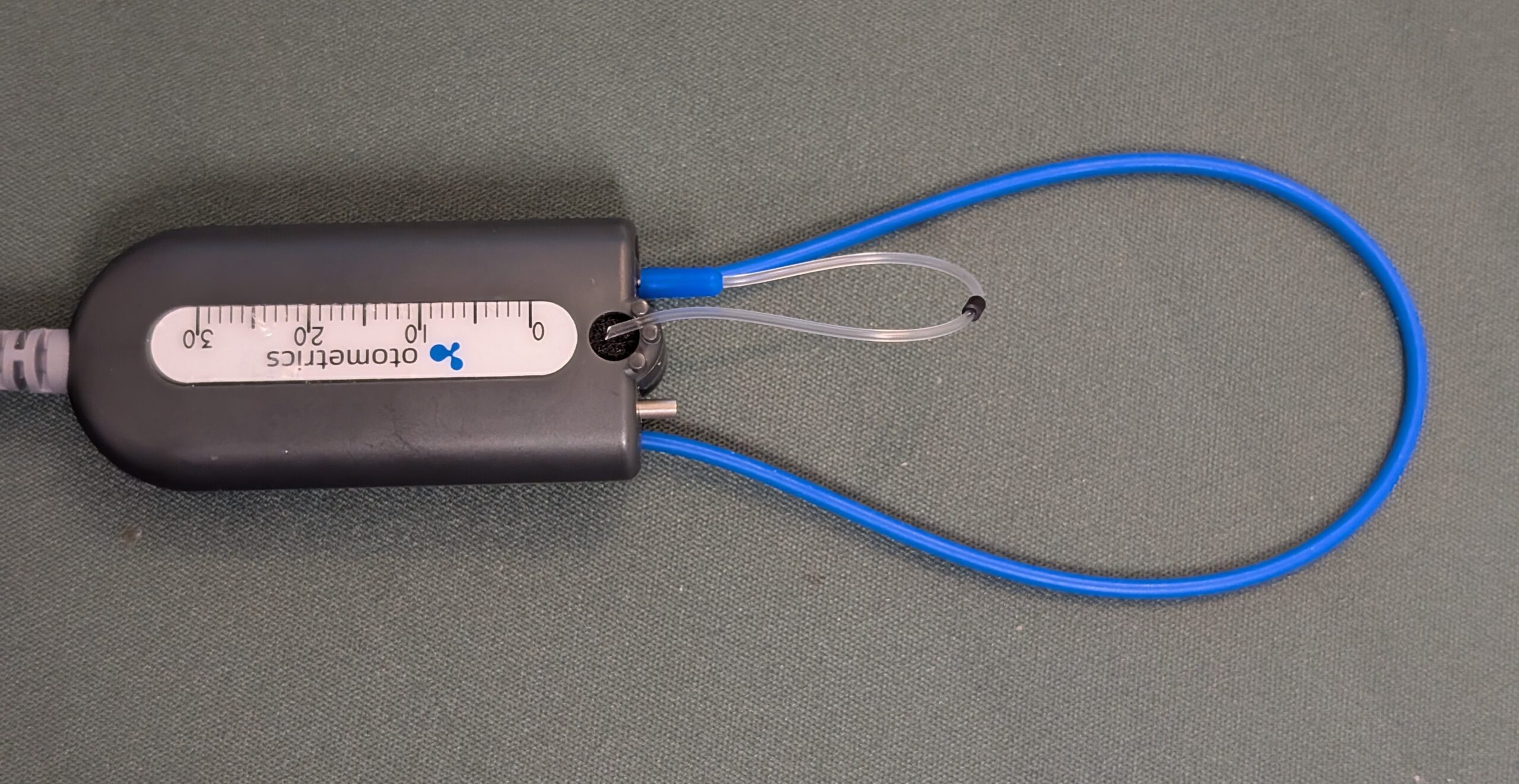
Probe microphone that measures sound environment close to the eardrum
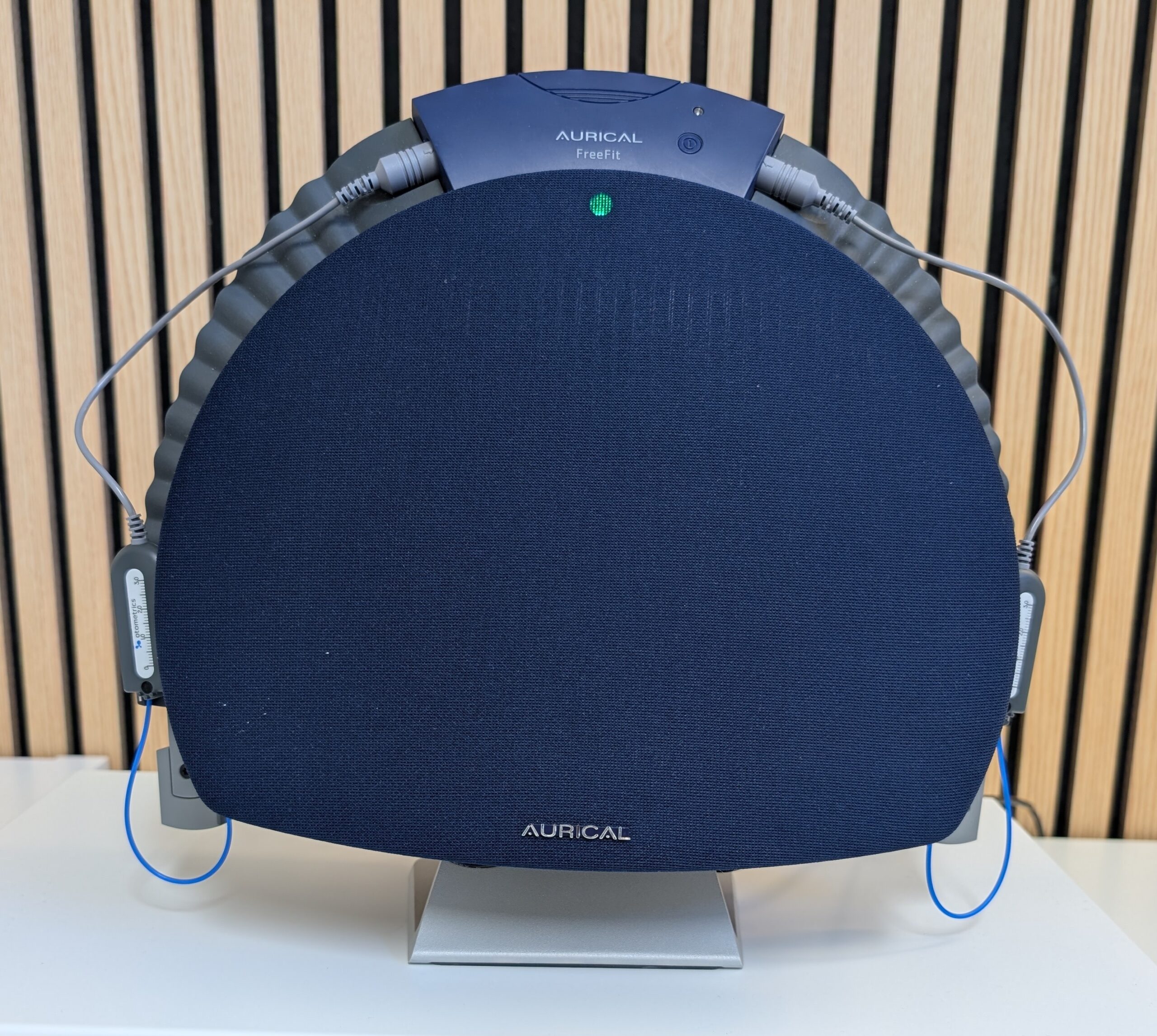
The Aurical one example of a real-ear measurement system used to verify hearing aid fittings at the San Francisco Hearing Center

